What to Include in a Plumbing Maintenance Supply List for Property Managers
A practical plumbing maintenance supply list tracks parts and supplies by building system, records installed equipment and model details, and defines replenishment triggers so maintenance teams can order the right plumbing supplies and repair parts when needed.
Organize the list around systems (restrooms, kitchens, domestic water, drainage), keep an equipment record for each asset, capture manufacturer/model/part numbers, and set simple reorder rules. This approach works across Southern California and broader U.S. portfolios and helps property managers avoid buying mismatched parts or unnecessary inventory.
Essential Categories To Include In A Plumbing Maintenance Supply List
Start with broad product categories from the plumbing system and map the exact items you expect to need. The table below shows common categories, what to record for each, and example items to consider when creating a property maintenance plumbing supplies list.
Category | What to record | Typical items to track |
|---|---|---|
Fixtures & trim | Location, model, finish, spare handles/trims | Lavatory sinks, faucets, escutcheons, pop-up assemblies |
Faucet repair parts | Manufacturer part numbers, cartridge type, kit size | Cartridges, O-rings, seats, springs |
Valves & shutoffs | Valve type, connection size, isolation points | Ball valves, angle stops, service stops |
Drains & traps | Trap size, tailpiece length, material | P-traps, strainers, tailpieces, cleanout plugs |
Toilets & flush parts | Model, tank type, flush valve or fill valve model | Flappers, fill valves, flush valves, repair kits |
Connectors & fittings | Material, connection type, diameter | Flex connectors, couplings, reducers, unions |
Seals, gaskets & consumables | Material, compatible models or sizes | Gaskets, thread tape, plumbers putty, silicone |
Common repair parts | Associated equipment, part number, interchangeability notes | Washers, packing, springs, seat assemblies |
Tools & maintenance supplies | On-site vs. spare, calibration or safety needs | Wrenches, tubing cutters, plungers, drain snakes |
Create And Maintain An Equipment And Parts Record For Each Asset
Before stocking parts, build a consistent record for every plumbing asset. The goal is quick identification when a repair is needed so you order the correct plumbing supplies and repair parts.
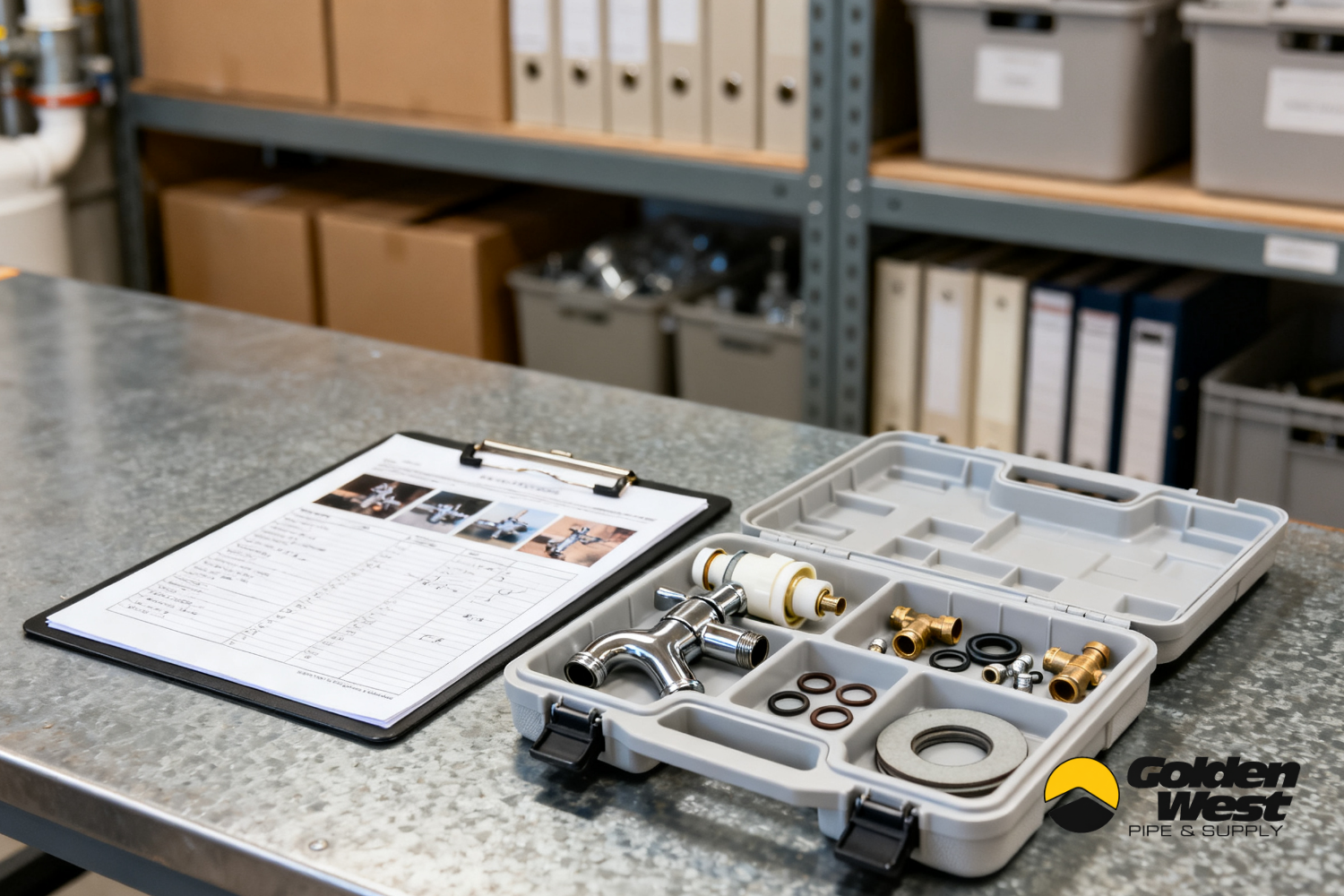
Essential fields: asset location, manufacturer, model number, serial number (if present), installation date, schematic or photo, access notes, and last service date.
Parts list: list OEM part numbers, local part cross-references, and compatible alternatives. Record preferred vendor or supplier contact information.
Verification: keep a recent photo of the part and the fixture nameplate. When in doubt, confirm availability with your supplier before adding to the active inventory.
Replenishment Checks And Simple Rules To Prevent Stockouts Or Overstock
Use straightforward replenishment checks tailored to each property's needs rather than one-size-fits-all reorder quantities.
Tier parts by criticality: Critical items (shutoffs, main valves, common faucet cartridges) should have faster reorder triggers than low-use trim pieces.
Set a minimum viable stock: Base this on building size, tenant count, and typical failure rates. Track consumption during seasonal peaks to adjust levels.
Confirm compatibility before ordering: Always verify manufacturer/model details and availability with a supplier before placing an order.
Use a simple audit cadence: combine visual daily checks for critical parts with quarterly inventory counts for the broader list.
Maintenance Inventory Planning Framework (Step-By-Step)
This framework helps property managers and maintenance supervisors build a repeatable plumbing inventory planning process.
Identify systems and assets: Map restrooms, kitchens, mechanical rooms and list the fixtures and devices in each space.
Compile baseline parts per asset: For each asset record the manufacturer/model and the common repair parts or consumables associated with it.
Tier spares: Classify parts as critical, common, or optional to guide stocking priority and budget.
Set reorder triggers: Define min/max quantities or days-of-supply triggers for each tier and critical item.
Document procurement details: Note preferred sources, lead times (when known), and any cross-reference part numbers.
Audit and update: After repairs or replacements, update the equipment record and adjust stock rules at the next audit.
Practical Considerations For Portfolios And Different Building Types
Single buildings and multi-property portfolios need different levels of centralization.
Small properties: Keep a compact kit of universal consumables and the most common repair parts for local quick fixes.
Multi-property managers: Centralize slow-moving critical spares and distribute common consumables to on-site closets to reduce emergency procurement time.
New installations or remodels: Capture parts and model numbers at turnover so future maintenance uses the correct replacement components.
Need To Confirm A Part Or Availability?
If you have a manufacturer, model number, part number, or photos, Golden West Pipe & Supply can help identify compatible plumbing supplies and verify current availability before you order.
Frequently Asked Questions
What Minimal Information Should I Record Before Ordering A Part?
At minimum record the fixture location, manufacturer, model number, and a photo of the part or nameplate. These details reduce risk of ordering incompatible parts.
How Often Should Inventory Be Audited?
A common approach is daily visual checks for critical spares and quarterly counts for broader inventories. Adjust cadence based on usage and incident frequency.
Can I Use Equivalent Parts Across Different Fixture Models?
Some parts are interchangeable, but compatibility depends on model and year. Always verify interchangeability with manufacturer data or a supplier before using alternatives.
Should I Centralize Spares For A Multi-Property Portfolio?
Centralizing slow-moving critical spares can save cost, while keeping fast-moving consumables on-site reduces downtime. Balance depends on travel times and repair response needs.
How Golden West Pipe & Supply Can Support Your Planning
Golden West Pipe & Supply provides product sourcing, part identification, and availability support for plumbing products and supplies, helping contractors and customers find components that match their project requirements. If you have equipment records, model numbers, manufacturer details, or product photos, the team can help identify potential matches, confirm relevant specifications, and advise on available sourcing options. Providing measurements, quantities, and details about the intended application can also make the identification process more efficient and help reduce ordering errors, unnecessary replacements, and project delays.
For general product selection and parts sourcing, explore Plumbing Parts and Supplies and learn more about Golden West as a Wholesale Plumbing Supply resource based in Downey, California. Whether you are sourcing replacement components or gathering materials for an upcoming installation, having the right product information can help you make more informed purchasing decisions and keep your project moving.