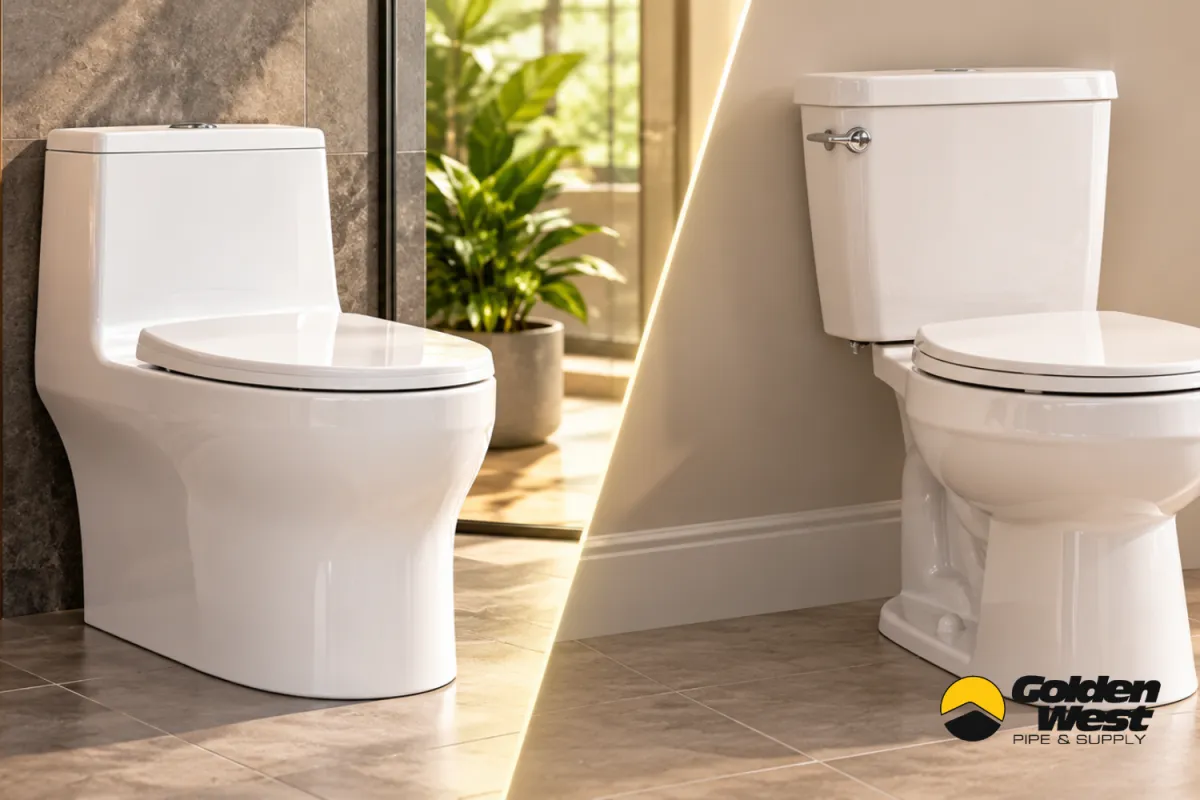
One-piece vs Two-piece Toilets: Differences for Installation, Cleaning and Replacement
The main difference in a one piece vs two piece toilet is construction: a one‑piece toilet has the tank and bowl molded as a single unit, while a two‑piece toilet ships and installs as a separate tank and bowl. That simple structural difference affects installation, cleaning, handling, repair options, and project planning for plumbers, remodel contractors and homeowners.
How the two designs differ and why it matters
Design and assembly drive the practical tradeoffs between one‑piece and two‑piece toilets. A one‑piece unit offers a continuous exterior surface where tank meets bowl, which reduces seams and can simplify cleaning. A two‑piece unit separates tank and bowl for easier handling, room access during replacement, and the ability to replace a single component if needed. For project planning, consider access (doorways and stairwells), on‑site handling, and whether the job requires replacing an entire fixture or only a part.
Comparison Table: One‑piece vs Two‑piece Toilet
Feature | One‑Piece Toilet | Two‑Piece Toilet |
|---|---|---|
Construction | Tank and bowl molded as a single ceramic unit. | Tank and bowl manufactured separately and joined during installation. |
Cleaning & appearance | Fewer seams and crevices where dirt accumulates; smoother exterior for cleaning. | Seam at the tank‑bowl junction requires attention but is common on most residential fixtures. |
Installation & handling | Heavier single piece—may be harder to maneuver through tight openings; installs as one unit. | Lighter components easier to carry into place; tank attached after bowl is set. |
Repair & replacement flexibility | If the tank or bowl is damaged, the whole fixture is typically replaced. | Tank or bowl can often be replaced individually, which can reduce scope for some repairs. |
Parts & service | Fewer separate parts to match; service typically focuses on internal tank components and seals. | Many replacement parts are tank‑ or bowl‑specific; easier to swap a damaged tank. |
Typical use cases | Preferred where a seamless look or easier cleaning is prioritized. | Common for retrofit, rough‑in compatibility, and situations where transporting large items is difficult. |
Cost considerations | Often positioned as premium in style and finish; initial unit cost can be higher depending on model. | Wide range of price points; entry‑level and contractor‑friendly models are common. |
Decision criteria for plumbers and remodel contractors
When selecting between one‑piece and two‑piece toilets for a job, evaluate site access, replacement scope, and customer priorities. For remodels where the fixture must pass through narrow hallways or up stairs, separate tank and bowl components can simplify logistics. If the owner prioritizes a sleek appearance or easier daily cleaning, a one‑piece model may be appealing. For commercial or multiunit work, consider repair workflows—two‑piece toilets can allow targeted part replacement without removing the entire fixture.
Practical installation and replacement notes
Measure rough‑in, doorway clearances, and setdown area before ordering—physical size and shape matter regardless of configuration.
One‑piece toilets arrive as a single heavier item; plan manpower, rigging, or equipment accordingly.
Two‑piece toilets require sealing and bolting the tank to the bowl—verify tank‑to‑bowl gaskets and fasteners are matched to the model.
For partial repairs, two‑piece designs can sometimes reduce time on‑site because a single component can be swapped instead of replacing the entire fixture.
Product and brand context
Manufacturers such as Kohler and Western Pottery produce both one‑piece and two‑piece toilets across different styles and performance levels. Specific models, configurations, and current availability should be verified with Golden West Pipe & Supply before purchase.
For projects that coordinate multiple fixtures, reviewing related Bathroom fixtures and other Plumbing fixture categories can help ensure consistent finish and sizing choices for a remodel.
How Golden West Pipe & Supply can help
Golden West Pipe & Supply provides bathroom fixture product selection and sourcing from its wholesale plumbing supply operations. Customers can confirm model availability, request part numbers, and coordinate purchases through Golden West’s Downey showroom and service counter. Golden West ships throughout the U.S. and operates local truck service in Los Angeles, Orange and Riverside Counties; specific product availability should be verified before ordering.
Frequently Asked Questions
Can I replace only the tank on a two‑piece toilet?
Often yes—many two‑piece toilets allow tank replacement without changing the bowl, but compatibility varies by model. Confirm tank‑to‑bowl fit and mounting pattern with the manufacturer or supplier before ordering parts.
Are one‑piece toilets harder to ship or deliver?
One‑piece toilets are heavier and bulkier because the tank and bowl travel as one unit, so shipping and on‑site handling require planning. For jobs with tight access, choose a two‑piece model to simplify transport.
Which configuration is easier to clean?
One‑piece toilets typically have fewer seams and a smoother exterior, which can make surface cleaning quicker. Two‑piece models remain the industry standard and can be cleaned effectively with standard procedures—cleanability is one factor among many to weigh.
Need help selecting the right toilet for a project?
If you have project measurements, rough-in details, model numbers, or specific installation requirements, Golden West Pipe & Supply can help confirm product compatibility, check current availability, and source the appropriate one-piece or two-piece toilet for your job. Whether you are replacing an existing fixture or selecting products for a new construction or remodeling project, our team can help you identify options that fit your specifications and project needs. Visit the Showroom to explore available plumbing products and get assistance with finding the right toilet for your installation.