How to Choose Plumbing Tools for Service Calls: Contractor Checklist
Choose plumbing tools for service calls by matching the tools to the known or likely repair, prioritizing safety and accurate diagnostics, and carrying essential plumber service tools for common repairs. Consider the type of plumbing system, pipe materials, fitting sizes, and accessibility of the work area when preparing your toolkit. Include basic measuring, cutting, tightening, and leak-detection equipment to handle routine service needs efficiently. Before leaving the shop, confirm any manufacturer-specific tool requirements, check that equipment is in good working condition, and ensure you have the necessary safety gear and replacement supplies. Proper preparation helps minimize repeat trips, reduce service delays, and allows plumbers to complete repairs more efficiently and confidently.
Why a Checklist Matters for Service Calls
A prepared contractor saves time on-site and avoids returning to the truck for missing items. A service-call checklist helps a technician assess what to bring based on the call type (leak, stoppage, fixture repair, valve replacement), known system materials, and any manufacturer instructions. This article provides a practical contractor tool checklist for professional plumbers and service technicians operating in Downey and Southern California.
Service-Call Preparation Checklist
Gather call information
Confirm the problem description, location, and access constraints with dispatch or the customer.
Ask for make/model numbers, photos, or previous repair notes—manufacturer instructions can change required tools.
Determine the pipe materials (copper, CPVC, PEX, galvanized, cast iron) and fitting types to estimate cutting and joining tools needed.
Bring diagnostic and basic plumber service tools
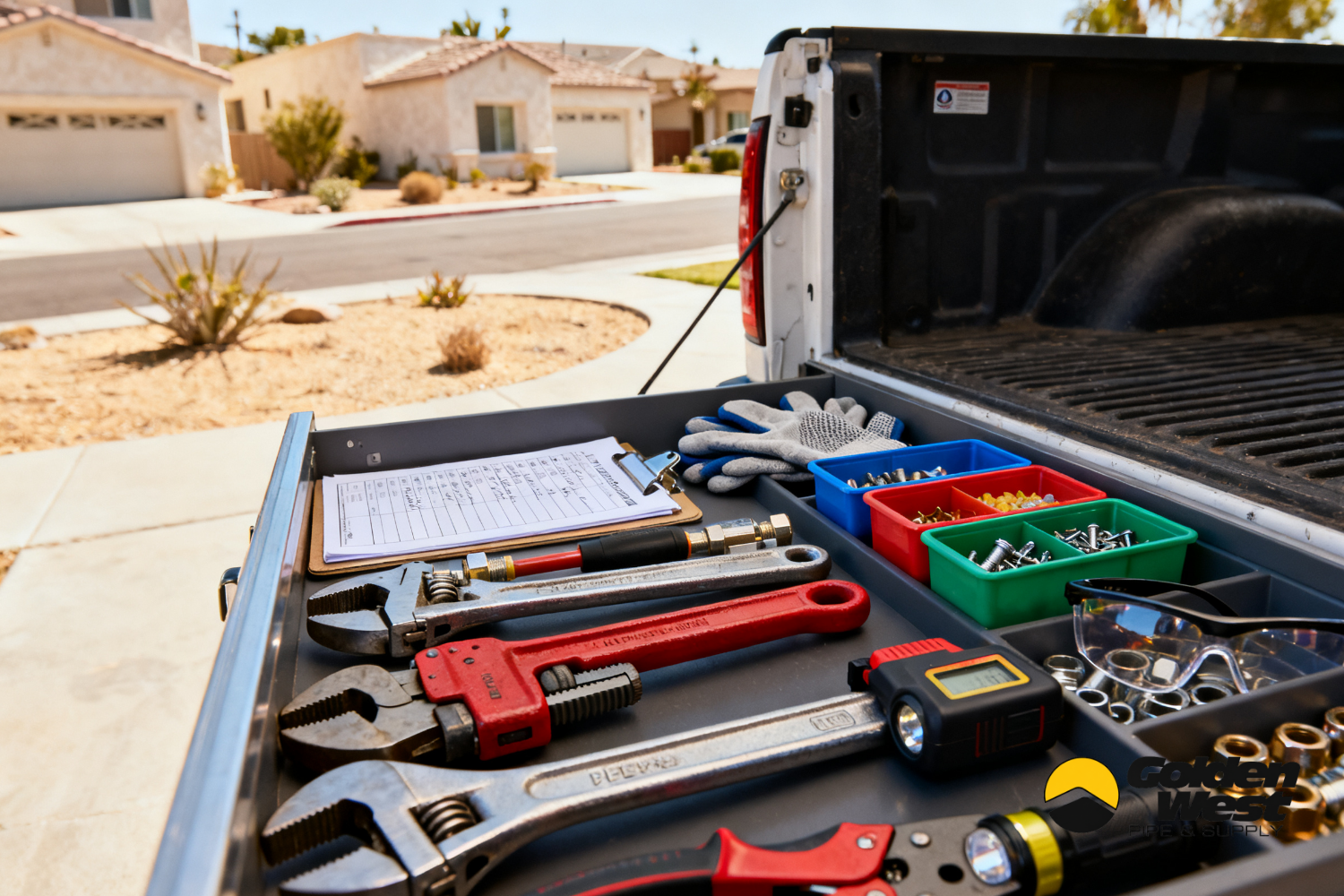
Adjustable wrenches, basin wrench, pipe wrenches (various sizes).
Plumbing snake or hand auger and a small power drain tool where allowed.
Inspection tools: flashlight or headlamp, inspection mirror, and a small borescope if available.
Pressure gauge and simple leak-detection tools (soapy water bottle, non-destructive leak detector where used).
Cutting, joining and repair basics
Tubing cutters for copper and plastic pipe, reciprocating saw blades suitable for metal and plastic, and a hacksaw with spare blades.
Selection of fittings and joining tools appropriate to the system: soldering torch and safety kit (when code and site permit), compression and flare tool sets, PEX crimp/expansion tools if the system uses PEX.
Hand tools for repairs: pliers, channel locks, screwdrivers, utility knife, and sealing tools (rope caulk, plumber’s putty) as appropriate.
Specialty and manufacturer-specific items
Identify any manufacturer-specific service tools (cartridge pullers, valve-specific inserts) from the call information. These are often required for warranty or correct disassembly.
When in doubt, delay non-emergency disassembly until the correct tool can be confirmed to avoid damaging components.
Consumables, spares and commonly used parts
Assorted O-rings, packing material, thread sealant (PTFE tape), joint compounds, hose clamps, and a small assortment of common fittings and adapters tailored to your service area.
Bring replacement shutoff valves and a few common trap or faucet parts if your route frequently requires them—verify specific parts match the on-site model before installation.
Safety and PPE
Eye protection, gloves (chemical- and cut-resistant as appropriate), knee pads, and a respirator when soldering or working in confined spaces with contaminants.
Fire extinguisher and a hot-work permit process where flame tools are used; follow local code and site rules.
Organizational and documentation items
Parts bin or organizer, tool bag or chest with labeled sections, and mobile inventory list to avoid overstocking the truck.
Smartphone or tablet with access to photos, model manuals, and a notes app for documenting condition and part numbers on-site.
Vehicle staging and efficiency
Stock commonly used plumber service tools where they are quickly accessible. Keep heavier or rarely used specialty tools secured but reachable.
Review routes and typical job types in your Downey and Southern California service area and adapt the tool mix over time.
Pre-call verification
Before leaving, cross-check the job information with your checklist: tools, safety gear, parts, documentation, and any manufacturer tool needs.
If a required specialty tool is not on-hand, confirm whether a temporary mitigation is acceptable or whether the call should be rescheduled with the correct equipment.
How Tool Needs Depend on the Repair and Manufacturer Instructions
Tool lists are general—actual requirements depend on the specific repair, the system materials, and manufacturer instructions. For example, some faucet cartridges require a factory puller; certain water heaters or specialty valves require manufacturer-approved service tools. Always confirm any manufacturer tool or part requirements before attempting repairs that could affect warranties or system integrity.
Where Golden West Pipe & Supply Fits In
Golden West Pipe & Supply lists a Professional Tools department that serves plumbers and contractors. Customers can contact Golden West for product selection, part identification, and product availability questions related to professional plumbing tools and accessories. Specific product availability should be verified with Golden West before relying on a particular tool or part for a service call.
For general information about the company and its contractor focus, see Plumbing tools and contractor supplies. For Professional Tools and related product options, see Golden West Pipe & Supply’s Professional plumbing tools resources.
Quick Contractor Tool Checklist (Printable)
Call info: photos, model numbers, pipe/fitting types
Diagnostics: flashlight, pressure gauge, snake/auger
Wrenches: adjustable, pipe, basin
Cutting/joining: tubing cutters, saw, soldering tools (if applicable), compression/PEX tools
Consumables: PTFE tape, O-rings, clamps, common fittings
PPE: eye protection, gloves, respirator (as needed)
Documentation: phone/tablet, manuals, parts list
Organizational: parts bins, tool bag, labeled storage
Frequently Asked Questions
How Many Tools Should a Service Technician Carry?
Carry enough basic diagnostic and repair tools to handle the most common calls in your service area, plus a rotation of consumables and a plan for sourcing specialty items. Over time, tailor the list to the job mix you encounter in Downey and Southern California.
Should I Bring Manufacturer-Specific Tools on Every Call?
No. Bring manufacturer-specific tools when the dispatch or customer provides model numbers or when you know that brand is common on your route. If a part or tool is required and you don’t have it, confirm availability before attempting irreversible disassembly.
Where Can I Check Availability for a Specific Professional Plumbing Tool?
Specific product availability should be confirmed with Golden West Pipe & Supply. Customers can Check Product Availability or contact the Professional Tools department for assistance with product selection and sourcing.
Need Help Finding the Right Tool or Part?
Finding the right plumbing tool or replacement part is essential for completing service calls efficiently and avoiding unnecessary delays. If you have a model number, part number, or photos, Golden West Pipe & Supply can help identify compatible professional plumbing tools, fittings, and accessories for your specific application. You can Check Product Availability to explore available products and get assistance with sourcing the right equipment for your needs. Whether you're preparing for routine maintenance, handling a repair, or looking for specialized plumbing components, the team can help confirm product compatibility and availability for service professionals in Downey and the surrounding Southern California area. Having the correct tools and parts ready before starting a job helps minimize repeat trips and keep projects moving.