How to Choose Pipe, Valves and Fittings: PVF Selection Checklist
Contractors choose the right pipe, valve or fitting by matching the system’s service requirements (fluid, temperature, pressure), materials and connection type to the job, then verifying dimensions, code compatibility and part identification before ordering. This guide explains how to choose pipe valves fittings for commercial and service plumbing work and gives a PVF selection decision tree you can use on the job.
Primary Decisions that Determine PVF Selection
Before comparing materials or brands, confirm these project fundamentals. Missing any of them is the most common reason a part won’t fit or perform:
Service medium: potable water, reclaimed water, waste/soil, gas, or HVAC loop.
Operating conditions: expected pressure range and temperature extremes for the system.
Material compatibility: corrosive conditions, dissimilar-metal contact, water chemistry, or special alloys required.
Connection type and size: threaded, sweat, flanged, press, compression, copper/PEX/barb, or welded ends and the exact nominal pipe size and OD/ID as applicable.
Code and project specs: local plumbing code, project drawings, and owner or engineer-specified materials and ratings.
Accessibility and maintenance: service space for valve operation, future access for replacement, and spare-parts planning.
PVF Selection Decision Tree
Use this decision tree on-site or at the counter to reduce guesswork when sourcing pipe, valves and fittings.
Identify the system and media.
If potable water → prioritize NSF/ANSI-approved materials and lead-free compliance per project requirements.
If waste/soil or condensate → consider materials and joints suited to solids, odors and slope/drainage requirements.
If gas or specialized fluids → confirm gas-rated valves and fittings and applicable certifications with the spec or engineer.
Confirm pressure and temperature.
Match valves and fittings to the system’s maximum working pressure and temperature rating specified for the project.
Select material family.
Choose material based on corrosion resistance, mechanical strength and compatibility with existing piping (copper, CPVC, steel, stainless, ductile iron, plastic, etc.).
Where dissimilar metals meet, plan for isolation or compatible transition fittings.
Pick connection style.
Match the connection type to the installed piping: threaded to threaded, flanged to flanged, sweat to sweat, press to press, or specify transition fittings if joining different systems.
Verify face-to-face or end-to-end dimensions for valves if replacing an existing unit.
Determine valve type and function.
Gate, ball, globe, check, butterfly, or control valves are chosen by required function: isolation, throttling, check/backflow prevention, or flow control. Confirm actuation method (manual, gear, electric, pneumatic) if required.
Check sizes and tolerances.
Confirm nominal pipe size and actual OD/ID for mating components; measure existing parts when possible.
When replacing, bring the old component or precise measurements to avoid mismatched fittings or valve end styles.
Validate code and project specs.
Compare selected materials and components to project drawings, engineer notes and local code requirements; request submittals when needed.
Confirm availability and lead time.
Verify current product availability and alternative equivalents before committing; if a direct match isn’t available, determine acceptable substitutions with the engineer or owner.
Practical Checklist to Bring to the Counter or Supplier
When requesting parts or quotes, bring the following to speed identification and reduce back-and-forth:
System type and service (potable, waste, gas, HVAC).
Exact pipe size (nominal and measured OD/ID if uncertain) and connection type.
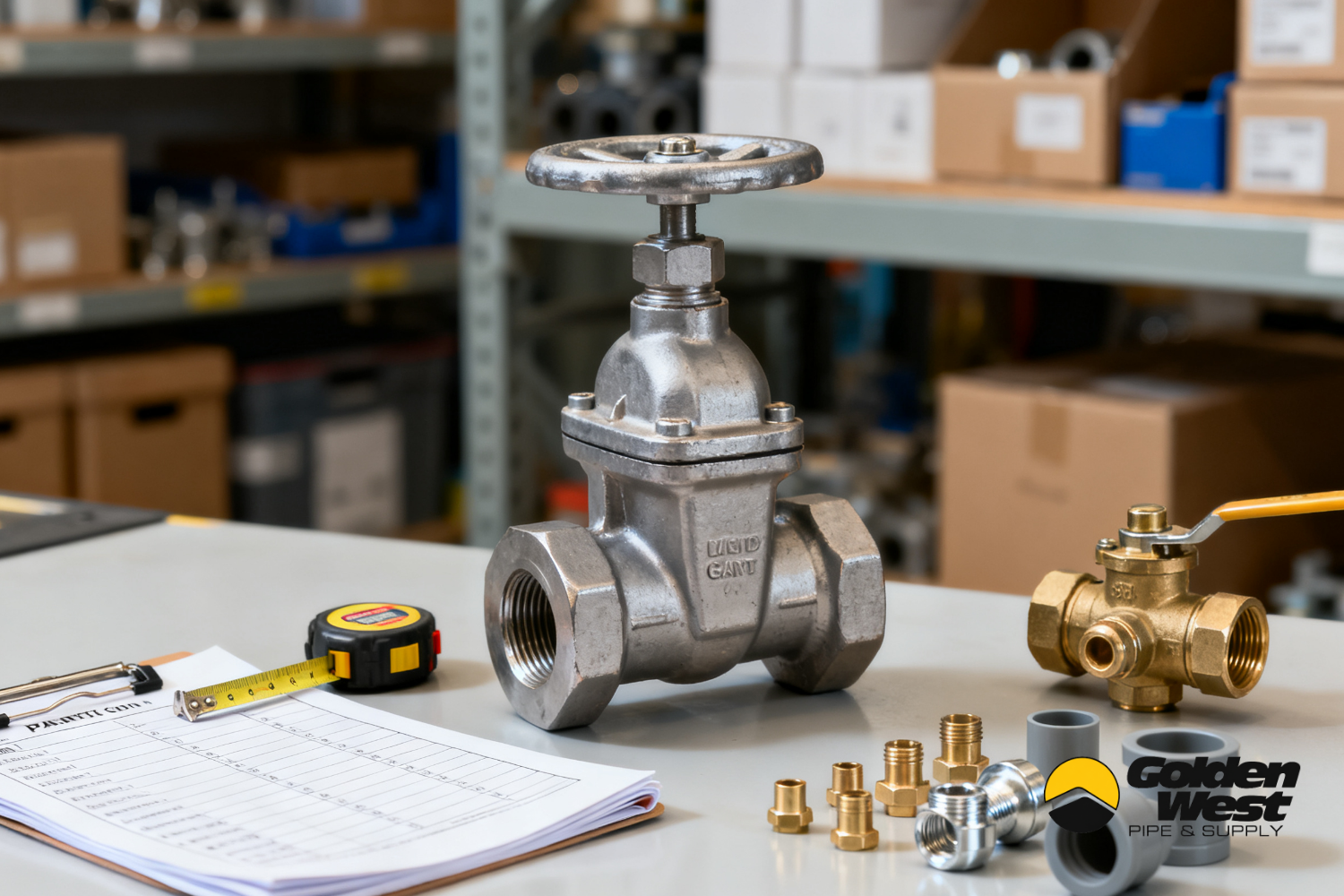
Existing part number, model, end style, face-to-face length, or a photo of the part in place.
Required pressure/temperature ratings and any material or code specifications from the project documents.
Installation constraints: space, orientation, and access for future servicing.
How Material and Connection Choices Affect Cost and Schedule
Material selection and connection style drive both initial costs and labor. For example, welded or flanged systems often require more onsite labor and inspection than press or threaded connections, while specialty alloys increase material cost but may be necessary for corrosive services. Use the decision tree above to weigh availability and installation implications before final selection.
How Golden West Pipe & Supply can help
Golden West Pipe & Supply provides contractor-focused support for PVF selection, product matching and sourcing. Customers can consult the service counter or the Downey showroom for part identification and submittal needs; Golden West maintains warehouse operations in Downey and Santa Fe Springs/Whittier, ships throughout the U.S., and operates truck service in Los Angeles, Orange and Riverside Counties. Specific product availability should be verified with Golden West before purchasing.
For quick access to product categories, see Golden West’s Pipe, valves and fittings and learn more about the company on the Plumbing parts and supplies page.
Frequently Asked Questions
What measurements do I need to identify a replacement valve or fitting?
Bring nominal pipe size plus measured OD/ID when possible, the connection style (threaded, sweat, flanged, press, etc.), face-to-face or overall length for valves, and a photo or old part number if available. These details let a supplier match the correct end style and dimensions.
How do I know if a material is compatible with an existing system?
Confirm the service (potable, wastewater, chemical), water chemistry and whether dissimilar metals are present. When in doubt, request material data sheets or consult the project engineer to help avoid corrosion or galvanic issues.
Can Golden West provide urgent PVF parts for Southern California jobs?
Golden West ships throughout the U.S. and operates local truck service in Los Angeles, Orange and Riverside Counties; customers should verify current availability and lead times with Golden West before scheduling work.
Need Help Sourcing the Right PVF Components?
Finding the right pipe, valves, and fittings (PVF) starts with accurate product identification and matching components to your project requirements. If you have technical drawings, part numbers, product photos, or measurements, Golden West Pipe & Supply can help identify components, match suitable products, and check availability. Providing detailed specifications and application requirements can help streamline the sourcing process and reduce the risk of ordering incompatible parts. Verify product specifications and availability before placing your order. Check Product Availability to get started.